


Reliable Quality Made Measurable
How modern torque and angle sensors ensure quality, simplify testing processes, and bring transparency to manufacturing.
Torque and Rotation Angle Sensors for Safe Processes and Reliable Quality
In industrial manufacturing, precise measurement data is the foundation for stable processes and consistently high product quality. Torque and angle measurement equipment is therefore an indispensable standard today. It supports both the periodic inspection of assembly tools and the recording of measurement results during ongoing production, thereby laying the groundwork for quality assurance and complete traceability.
Rotary and stationary torque sensors offer solutions that are characterized by ease of use, high flexibility, and reliable performance in a wide variety of measurement applications.
Precision Through Integrated Measurement Intelligence
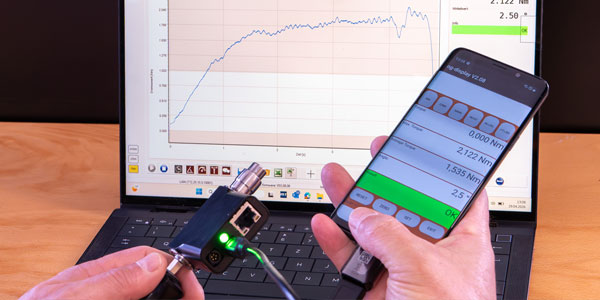
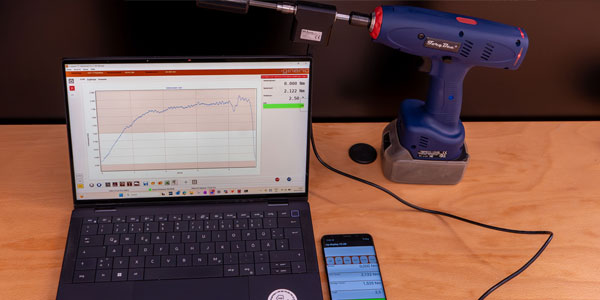
A key advantage of modern torque and rotation angle sensors is their built-in intelligence. Thanks to digital interfaces, they can be connected directly to a PC, allowing measurement processes to be monitored, evaluated, and documented in real time. When used in conjunction with the n-quirer TT measurement, analysis, and evaluation software, this creates a transparent and reliable testing process that provides users with dependable support in their day-to-day production operations.
Fixed-mount torque sensors for reliable tool inspection
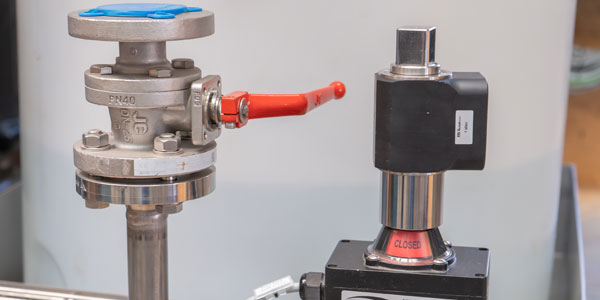
Fixed-mount torque sensors are used wherever tools need to be specifically monitored. They help provide a reliable answer to the key question: Is the tool operating within the required parameters?
They can be used to reliably test manually operated, hand-held, and hand-guided torque tools. For powered tools, it may be advisable to use a screwdriver simulator in addition to ensure realistic test conditions and obtain reliable results.
Rotating sensors for analysis directly at the screw joint
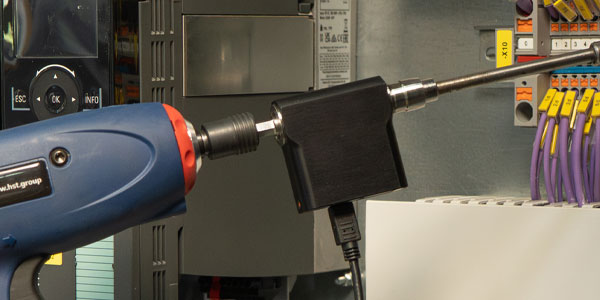
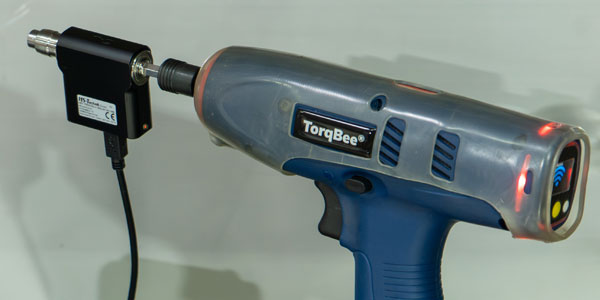
Rotary torque/angle sensors are used when tool- and fastening-specific tests are required. They make it possible to analyze a tool’s behavior directly at the actual fastening location and to precisely adjust fastening tools to a specific fastening application.
Typical applications include:
- Quick screwdriving case analyses directly on the production line
- Tests on pre-production or prototype components
- Estimates of Friction Torques, Loosening Torques, and Pull-Through Torques
- Validation of Screw Case Designs
As a result, rotating sensors play an important role in ensuring process reliability and enabling a well-founded assessment of actual assembly conditions.
The Benefits of Modern Sensor Solutions at a Glance
The measurement intelligence built directly into the sensor offers numerous practical advantages:
- No additional display hardware required
- Only the sensor needs to be calibrated
- No complex measurement chain consisting of a display unit, cable, and sensor
- Optical signal transmission from the rotating shaft
- high measurement accuracy in the respective measurement method
- Measurement ranges from 5 Nmm to 1,000 Nm
- Suitable for various tool drives
- Can be used flexibly on the production line or at a workbench
The data analysis is also designed for efficiency and traceability. Measurement results can be processed further using Excel or CSV. Graphs and results can be compared directly in n-quirer TT, and up to two sensors can be used simultaneously in a single measurement.
Intuitive software for clear and traceable processes
Measurements are configured using the Windows application n-quirer TT. Measurement programs can be archived there and retrieved as needed—for example, via a scanner. Editable Excel templates are available for analysis and documentation. In addition, data can be saved directly to MySQL or Microsoft SQL databases.
This not only makes testing processes simpler and more efficient, but also ensures that they can be documented in a sustainable manner and securely integrated into existing quality processes.
Flexible Measurement Applications with the TT Android App
For applications where mobility and speed are particularly important, the TT Android app is also available. It is ideal for simple measurements directly on the production line or in hard-to-reach areas, thereby providing additional flexibility in the production environment.
Another advantage: The Android device can be used as a Wi-Fi bridge to transmit measurement data directly to a database via a networked PC. This improves data availability and supports seamless integration into digital manufacturing processes.
Conclusion
Torque and angle sensors are much more than just testing equipment. They are a reliable component for quality, process reliability, and efficiency in industrial manufacturing. Through precise measurements, flexible applications, and comprehensive documentation, they help companies make informed decisions, maintain stable processes, and ensure consistent quality.