


Efficient machine capability testing in fastening technology:
How quality assurance and assembly reduce costs and increase process reliability
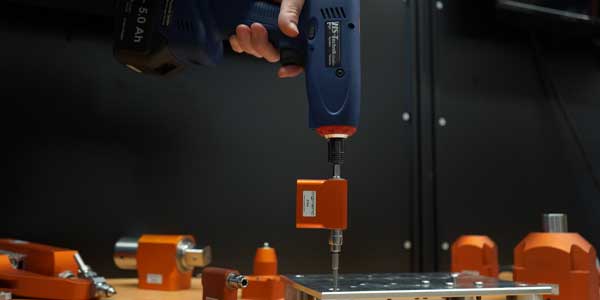
Quality assurance (QA) and assembly companies are increasingly facing the same problem: rising testing costs for fastening tools. External partners or suppliers often carry out machine capability tests directly on site - resulting in annual testing costs of several thousand francs, even for a few simple shut-off screwdrivers. At the same time, there is increasing pressure to ensure conformity to standards, reproducibility and process reliability.
This article shows how QA managers and assembly managers can optimize their inspection processes, reduce costs and increase quality at the same time.
1. external fastening tool testing: Why costs are rising
Accredited service providers deliver standard-compliant tests - but the scope of testing, methods and price structure vary greatly. For many companies, this means
- High annual costs
- Dependence on external appointments
- Limited flexibility in QA and assembly
A precise comparison is particularly worthwhile for small and medium-sized companies, as more and more qualified providers and tool suppliers are building up their own testing expertise.
2. carry out machine capability tests yourself: Flexible, standard-compliant and cost-efficient
An increasingly popular alternative is the internal machine capability test (MFU). It offers several advantages, particularly for QA and assembly:
- Significant cost reduction
- More flexibility with test intervals
- Direct gain in knowledge about assembly processes and screw connections
- Faster response to process deviations
How do you stay compliant?
The procedure is based on the requirements of VDI/VDE 2645 Sheet 2.
Steps for internal, standard-compliant testing:
- Select the appropriate torque/angle of rotation sensor
A rotating measurement sensor enables precise measurements to be taken directly on the bolted joint. - Adjust the tool to the actual fastening process
The test is carried out on the basis of the actual assembly conditions - a key factor for process capability. - Carry out regular checks
- Directly on the real bolted connection
- Or with the help of a validated fastening simulator
This ensures that QA and assembly can be checked at any time.
- Digital documentation and audit security
Modern measurement software automatically creates structured test reports in the company layout - perfect for internal and external audits.
3. more than just a capability test: Valuable analyses for QA and assembly
Rotating torque/rotation angle sensors can be used, for example, to perform many other highly relevant analyses for QA and assembly in addition to machine capability testing:
- Tear-off attempts
- Determination of release torques
- Testing the residual torque
- Validation of the bolted joint design
- Early detection of faults in the assembly process
These measurements provide deeper insights into process deviations, tool behavior and screw joint quality - a clear added value for every production line.
4 Conclusion for quality assurance and assembly
The internal machine capability test offers companies the opportunity to increase quality, reduce costs and optimize assembly processes based on data. It is an efficient tool for QA managers and assembly supervisors to:
- Sustainably reduce testing costs
- Tools can be checked flexibly and at any time
- Ensure auditability on a permanent basis
- Design fastening processes to be more stable in the long term
If you want to delve deeper, you should take a look at VDI/VDE 2645 Sheet 2 - the central guideline for testing different types of fastening tools.